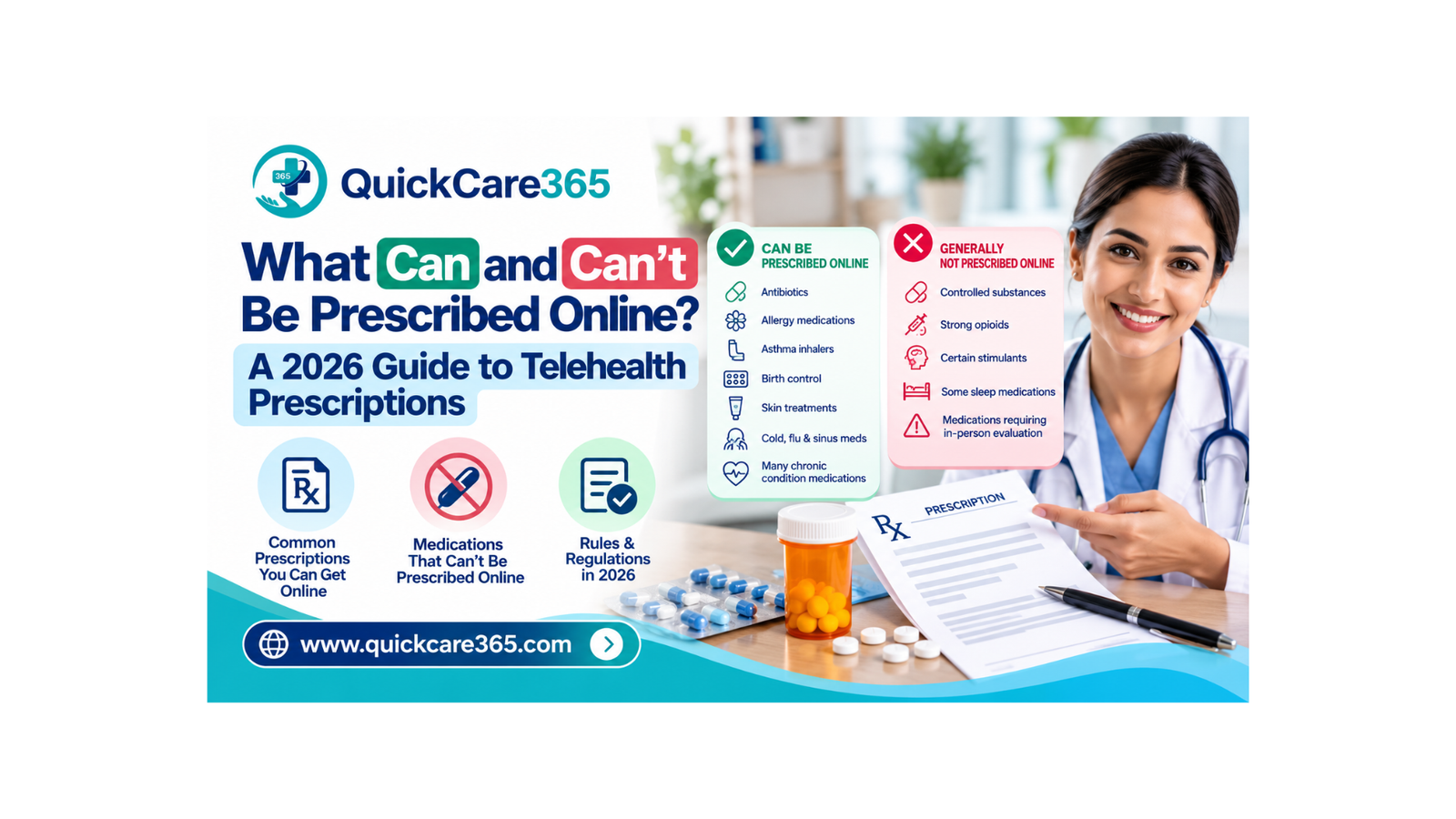
Telehealth providers can prescribe most medications that aren’t controlled substances: antibiotics, antifungals, antivirals, antihistamines, birth control, blood pressure and cholesterol medication, many antidepressants and topical treatments. Controlled substances are different. Through December 31, 2026, a temporary federal rule lets registered practitioners prescribe them by telemedicine without an in-person visit. That rule is due to expire, and a permanent replacement is still being finalized.
What can be prescribed online
| Category | Examples | Online? |
|---|---|---|
| Antibiotics | Amoxicillin, nitrofurantoin, doxycycline | Yes, when a bacterial infection is likely |
| Antifungals | Fluconazole, terbinafine cream | Yes |
| Antivirals | Valacyclovir, oseltamivir | Yes. Timing matters, so book early |
| Allergy treatments | Antihistamines, steroid nasal sprays | Yes |
| Skin treatments | Topical steroids, acne creams | Yes |
| Birth control | Pill, patch, ring | Yes, in most states |
| Chronic condition medication | Blood pressure, cholesterol, thyroid, diabetes | Often, especially refills |
| Non-controlled antidepressants | Sertraline, fluoxetine | Yes, usually through mental health services |
| GLP-1 weight management | Semaglutide, tirzepatide | Yes, after an eligibility evaluation |
| Controlled substances | See below | Temporarily allowed through Dec 31, 2026 |
| Medications given in a clinic | Vaccines, IV therapy, some injections | No |
Controlled substances: what the schedules mean
The DEA sorts controlled medications into schedules based on potential for misuse:
| Schedule | Examples |
|---|---|
| II | Adderall, Vyvanse, Ritalin, oxycodone, hydrocodone |
| III | Testosterone, ketamine, buprenorphine, Tylenol with codeine |
| IV | Alprazolam (Xanax), zolpidem (Ambien), tramadol, phentermine |
| V | Pregabalin (Lyrica), some codeine cough syrups |
The 2026 position, and what happens after December 31
The Ryan Haight Act of 2008 originally required an in-person evaluation before a controlled substance could be prescribed remotely. That requirement was suspended during the COVID-19 emergency and has been extended four times since. The current extension allows Schedule II–V prescribing via audio-video telemedicine through December 31, 2026.
The permanent replacement is close. In August 2026, the DEA sent its final “special registration” rule for telemedicine to the White House for review, and final action is anticipated in November. The final text isn’t public yet. The proposed version would have required a special DEA registration, prescription drug monitoring checks, identity verification and tighter limits on Schedule II drugs.
From January 2027, one of three things will happen:
- The special registration framework takes effect, with new conditions on prescribers and possibly on patients.
- Another temporary extension buys more time.
- The flexibilities lapse, and the in-person requirement returns for many prescriptions.
Two permanent rules already sit alongside this. One allows buprenorphine for opioid use disorder to be started by telemedicine, including audio-only visits. The other covers continuity of care for Veterans Affairs patients.
If you currently get a controlled medication through telehealth, talk to your prescriber now about what they’ll need from you in 2027, including whether you should plan an in-person visit.
Why some medications still need an in-person visit
Some prescriptions can be issued legally online but still aren’t a good idea without a physical exam or ongoing monitoring. Examples include:
- Medications that need regular blood tests, such as some thyroid, heart rhythm and anticoagulant drugs
- Treatment for symptoms that suggest something serious, such as chest pain, severe abdominal pain or neurological changes
- Conditions where the diagnosis depends on examination, such as a suspicious mole or a possible fracture
A good telehealth provider will say so and refer you, rather than prescribing to keep the visit “successful.”
Video, audio or messaging?
The format of your visit can affect what can be prescribed. Most non-controlled medications can be prescribed after a messaging or video consultation if the provider can meet the standard of care. The federal controlled-substance flexibilities generally require a real-time audio-video visit, with audio-only allowed only in specific cases such as opioid use disorder treatment. Some states also set their own rules on format. If a provider asks you to switch from messaging to video, it’s usually because the rules or your symptoms require it.
State law adds its own layer
Federal permission doesn’t override stricter state rules. Some states impose their own in-person requirements or limits on specific drugs, and the provider must follow the law of the state where you’re located during the visit.
What “medically appropriate” means
A telehealth provider assesses and then decides. They don’t dispense on request. Being able to prescribe a drug online doesn’t mean you’ll get it. A provider may conclude that your infection is viral, that a safer alternative exists, or that you need an in-person exam first. That’s the same standard as an office visit.
When tests come first
Some prescriptions depend on test results: a urine culture after a failed UTI treatment, baseline labs before a GLP-1, or STI testing. A telehealth provider can order the test, but you’ll need to visit a lab to provide the sample.
Refills vs. new prescriptions
Refills of a stable, existing medication are usually straightforward online. Bring your current prescription details and recent history. Starting something new generally needs a fuller evaluation, and some medications require monitoring that makes periodic in-person visits sensible.
If a provider declines to prescribe
This is a normal outcome, not a system failure. You should still get a visit summary explaining why, what to do instead, and where to go if you need in-person care. Ask about the refund policy before you book. Some services refund you if you cancel before a provider reviews your request.
How your prescription reaches the pharmacy
Most prescriptions go electronically to the pharmacy you choose, often within minutes of the visit. Many states require electronic prescribing for controlled substances. Medication costs are paid at the pharmacy and aren’t part of the visit fee.
Red flags
Be wary of any service that:
- Guarantees a specific prescription before you’ve been evaluated
- Prescribes without any consultation
- Won’t tell you the name and credentials of the prescriber
- Offers controlled substances with no questions about your history
- Ships medication from an unverifiable overseas pharmacy
What QuickCare365 prescribes
[EDITORIAL PLACEHOLDER. Confirm scope with the clinical team, including whether any controlled substance is prescribed under the short-term refill service, and complete this section.]
QuickCare365 focuses on non-controlled medications for common acute conditions, including antibiotics, antifungals, antivirals and topical treatments. They’re prescribed by licensed nurse practitioners when medically appropriate and sent electronically to your chosen pharmacy.
Frequently asked questions
Can telehealth prescribe antibiotics? Yes, when a provider decides a bacterial infection is likely.
Can telehealth prescribe Adderall? Federally, yes, through December 31, 2026, under the temporary DEA rule, subject to state law. What happens after that depends on the final DEA rule. Many telehealth services don’t prescribe stimulants at all.
Can telehealth prescribe birth control? Yes, in most states. Pills, patches and rings are commonly prescribed online after a health history review.
Can telehealth prescribe pain medication? Non-controlled pain relief, yes. Opioids fall under the controlled substance rules above.
Can a provider refuse to prescribe? Yes. Prescribing is a clinical decision, not a purchase.
Do I pay if I don’t get a prescription? Usually yes. You’re paying for the evaluation. Check the refund policy before you book.