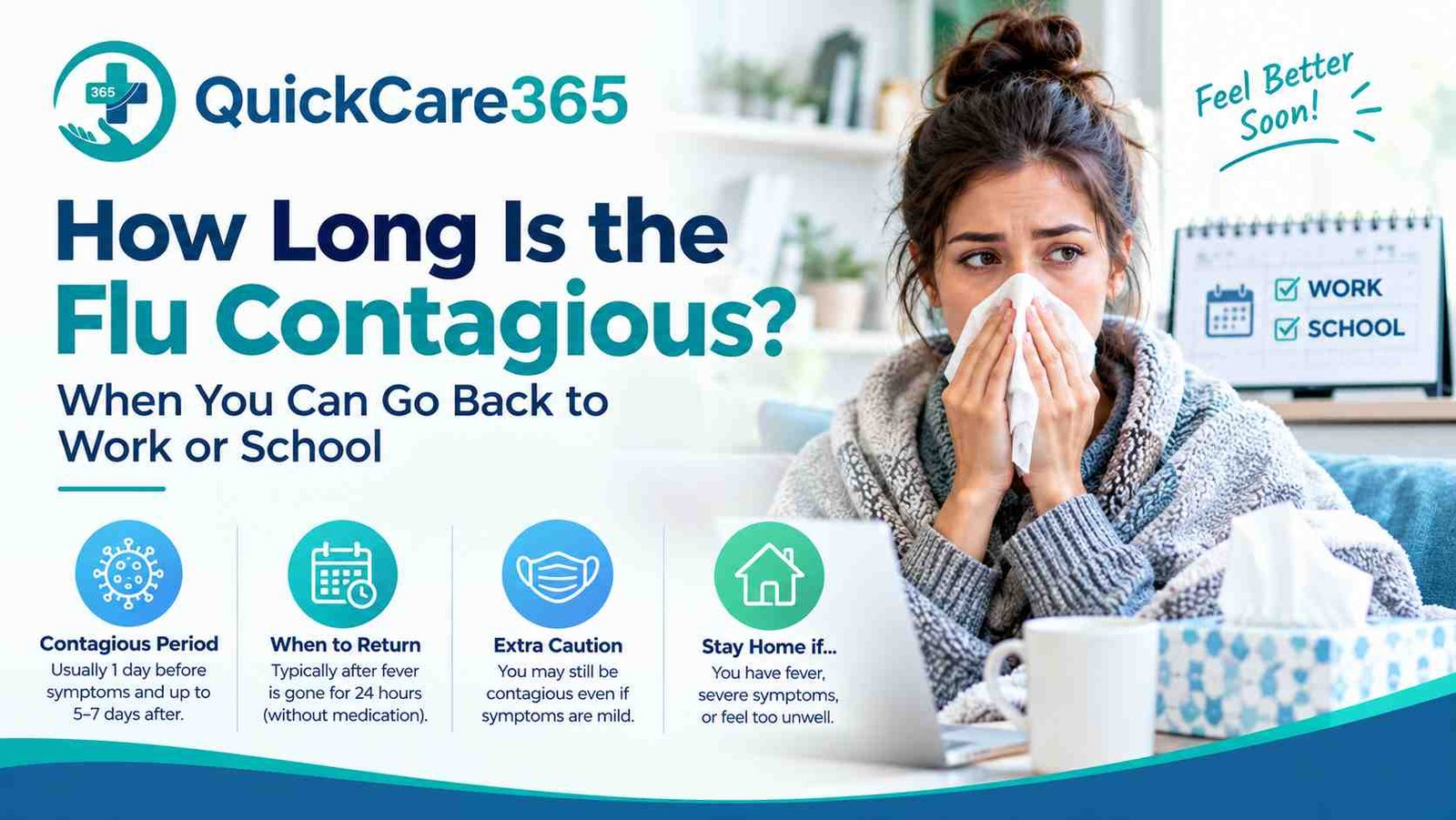
Most adults with the flu are contagious from about one day before symptoms start until five to seven days after. They’re most contagious in the first three to four days. Children and people with weakened immune systems can stay contagious longer. CDC guidance is to stay home until your symptoms are improving overall and you’ve been fever-free for at least 24 hours without fever-reducing medicine. After that, take extra precautions for five more days.
The flu contagious timeline
| When | How contagious |
|---|---|
| 1–4 days after exposure | Incubation period (usually about 2 days). You may not feel sick yet. |
| About 1 day before symptoms | Already contagious |
| Days 1–4 of symptoms | Most contagious |
| Days 5–7 | Contagiousness declining for most adults |
| Beyond day 7 | Possible in young children and people with weakened immune systems |
That first row is why flu spreads so easily. People pass it on before they know they’re sick.
How the flu spreads
Flu spreads mainly through droplets released when people cough, sneeze or talk, which can reach people nearby. Less often, it spreads when someone touches a contaminated surface and then their mouth, nose or eyes.
Crowded indoor spaces, shared offices, schools and holiday gatherings are ideal conditions, which is one reason flu season peaks in winter.
When you can go back to work or school
The CDC’s respiratory virus guidance applies to flu, COVID-19 and RSV alike. You can return to normal activities when both of these are true:
- Your symptoms are getting better overall, and
- You’ve had no fever for at least 24 hours without taking fever-reducing medication, such as acetaminophen or ibuprofen.
The “without medication” part matters. Fever reducers hide a fever without making you less contagious. If you took ibuprofen this morning and feel fine, your 24 hours hasn’t started yet.
For the five days after you return, take extra precautions:
- Wear a well-fitting mask around others
- Keep your distance where you can, especially from higher-risk people
- Wash your hands often
- Improve ventilation: open a window or use air filtration
Workplaces may set stricter rules. Healthcare, childcare and food service employers, and many schools, have their own return policies. Check before you go back.
A worked example
You wake up with a fever on Monday. You’re sick through Wednesday, still taking ibuprofen. On Thursday you stop the ibuprofen, and you have no fever on Thursday or Friday. Your cough is better.
You’ve been fever-free for 24 hours without medication by Friday morning, so you can return on Friday, wearing a mask and taking precautions through the following Wednesday.
Does antiviral treatment make you less contagious?
Flu antivirals such as oseltamivir and baloxavir shorten illness and reduce complications, especially when started within 48 hours. There’s some evidence that early treatment can also reduce spread to household members. It doesn’t change the return-to-work rule, though: follow the symptom and fever criteria either way.
Protecting your household
If someone at home has the flu:
- Keep them in a separate room where possible, and use a separate bathroom if you can
- Have the sick person wear a mask in shared spaces
- Wash hands often, and don’t share cups, utensils or towels
- Clean high-touch surfaces like door handles, remotes and phones
- Protect higher-risk household members. Older adults, pregnant people, infants and people with chronic conditions may be candidates for preventive antiviral medication after exposure. Ask a provider promptly.
Children and the flu
Children often shed the virus longer than adults and are more likely to spread it, which is why flu often moves from school to home.
Keep a sick child home until they meet the same CDC criteria, and check your school’s policy. Seek urgent care for a child with fast or labored breathing, signs of dehydration (no tears, few wet diapers), bluish lips, a fever with a rash, unusual drowsiness, or symptoms that improve and then come back worse.
How long does the flu itself last?
Most people feel better within five to seven days. A cough and tiredness can hang on for two weeks or more. Feeling run down after your fever is gone doesn’t mean you’re still contagious, as long as you’ve met the criteria above.
Do you need a doctor’s note?
Many employers require documentation after a few days off, and schools often ask for one too. You can get an excuse letter during a telehealth visit, signed by a licensed provider, without sitting in a waiting room while you’re contagious.
Is it still the flu, or a complication?
Most people improve steadily. Watch for signs that something else has developed:
- Fever that returns after you’d started to improve
- A cough that worsens, especially with colored phlegm or chest pain, which can signal pneumonia
- Facial pain and pressure lasting beyond 10 days, which could be a sinus infection
- Ear pain after the flu, which is common in children
- Severe muscle pain or weakness
These need a provider’s assessment, and some need antibiotics. Antibiotics don’t treat the flu itself.
Higher-risk groups: don’t wait it out
Adults 65 and older, pregnant people, young children, and people with chronic conditions such as asthma, diabetes or heart disease are more likely to develop complications. If you’re in one of these groups, contact a provider as soon as flu symptoms start. Antivirals work best within 48 hours.
How telehealth can help
A video or messaging visit lets you be assessed from home, so you don’t expose anyone in a clinic. If you’re within 48 hours of symptoms starting, ask whether an antiviral is right for you.
QuickCare365 cold and flu consultations start at $14.99, 8:00 AM to 11:00 PM, seven days a week.
Frequently asked questions
Am I contagious if I don’t have a fever?
You can be, especially in the first few days of illness and the day before symptoms start. Fever is one marker, not the only one.
Is the flu contagious after the fever breaks?
Possibly, especially in the first days. Wait 24 hours fever-free without medication with improving symptoms, then take precautions for five days.
Can I go to work with the flu if I feel okay?
Not until you meet the CDC criteria. Feeling okay while on fever reducers doesn’t count.
Can I still spread the flu if I had a flu shot?
Yes, if you get infected. Vaccinated people who catch the flu often have milder illness, though.
How soon after exposure will I get sick?
Usually within about two days, but anywhere from one to four days.
Can I get the flu twice in one season?
Yes. Different flu strains, including influenza A and B, circulate in the same season, so getting one doesn’t protect you from the others.
Disclaimer: This article is general information, not medical advice.