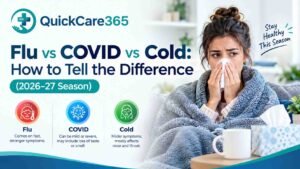
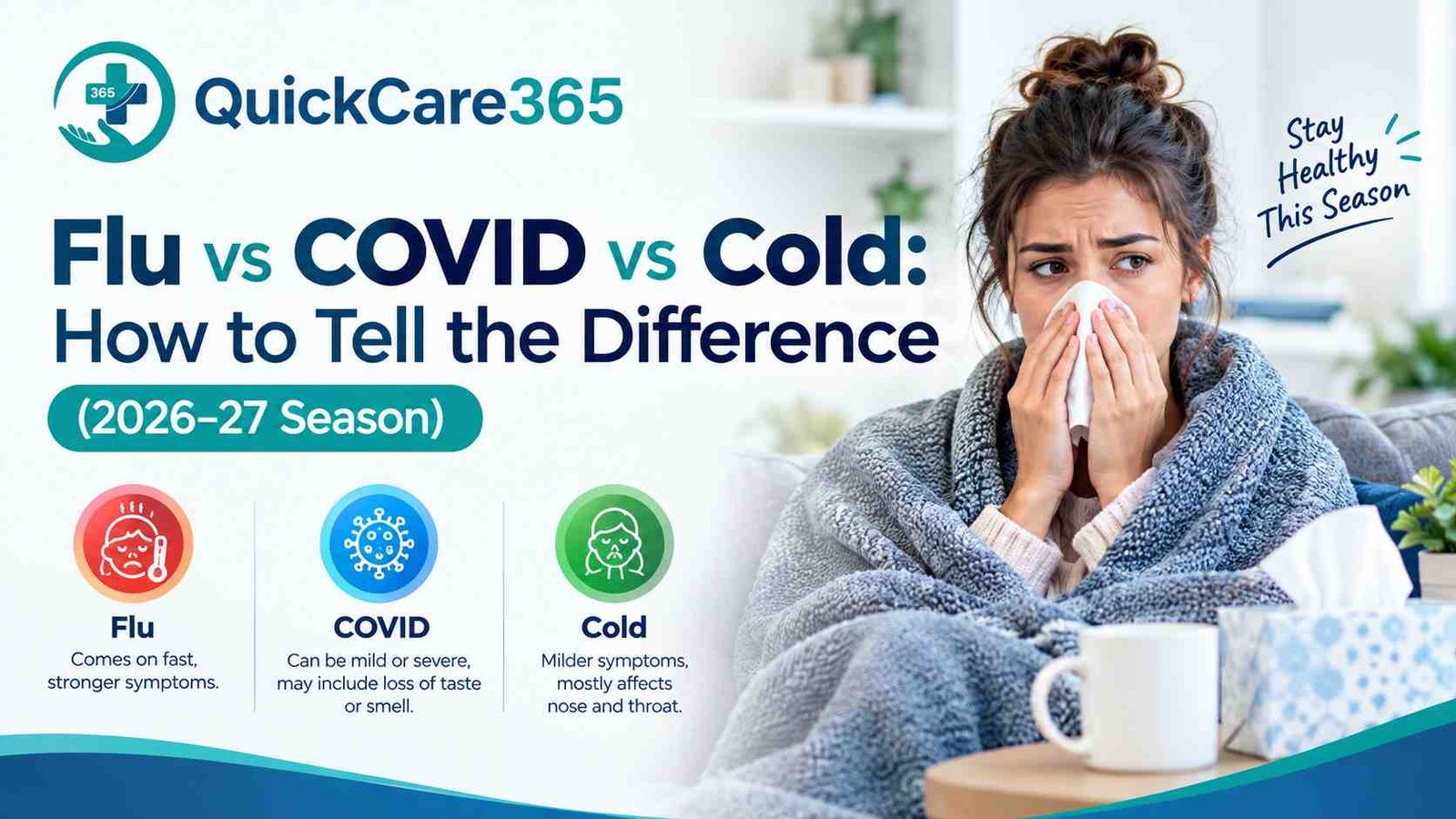
How fast symptoms start and how bad they get are the quickest clues. A cold creeps in over a day or two and mostly stays in your nose and throat. The flu hits suddenly, often within hours, with fever, body aches and exhaustion. COVID-19 can look like either one. Because the three overlap so much, a test is the only way to be sure. With flu and COVID, knowing early matters, because antiviral treatment works best in the first few days.
Symptoms side by side
| Symptom | Cold | Flu | COVID-19 |
|---|---|---|---|
| How it starts | Gradually | Suddenly | Gradually or suddenly |
| Fever | Rare | Common, often high | Common |
| Body aches | Mild | Common, often severe | Common |
| Fatigue | Mild | Common, can be extreme | Common, can linger |
| Runny or stuffy nose | Common | Sometimes | Sometimes |
| Sore throat | Common | Sometimes | Common |
| Cough | Mild | Common | Common |
| Loss of taste or smell | Rare | Rare | Possible, though less common than earlier in the pandemic |
| Shortness of breath | Rare | Possible | Possible |
| Typical duration | 7–10 days | 5–7 days; tiredness can last two weeks | Usually 1–2 weeks |
The quickest clues
- How fast it started. “I was fine at lunch and in bed by dinner” is classic flu.
- Fever. A high fever makes a plain cold unlikely.
- How flattened you feel. Most people with a cold can still function. Flu often makes getting out of bed hard.
- Taste and smell. A sudden loss points toward COVID-19.
- Who around you is sick. A household or office outbreak during flu season is a strong hint.
None of these clues is definitive, which is why testing matters.
Why testing is worth it
Over-the-counter combination tests that check for both COVID-19 and flu from a single nasal swab are now sold at many pharmacies, alongside COVID-only tests.
Two tips for accurate results:
- Test early, and test again. A negative home antigen test in the first day or two doesn’t rule out COVID-19. If you’re still sick, test again about 48 hours later.
- Share your result with your provider. It helps them decide whether you’re a candidate for antiviral treatment.
Treatment depends on which virus it is
| Illness | Antiviral options | When to start | Usually recommended for |
|---|---|---|---|
| Cold | None | — | Symptom relief only |
| Flu | Oseltamivir, baloxavir and others | Within 48 hours of symptoms starting | Higher-risk or severely ill people; may be offered to others |
| COVID-19 | Oral antivirals such as nirmatrelvir/ritonavir | Within 5 days of symptoms starting | People at higher risk of severe illness |
Flu antivirals can shorten illness by about a day and lower the risk of complications in higher-risk people. Antibiotics don’t work against any of these viruses.
Higher risk of complications includes adults 65 and older, young children, people who are pregnant, people with asthma, COPD, heart disease, diabetes or kidney disease, people with severe obesity, and anyone with a weakened immune system.
What helps, whichever one you have
- Rest and fluids. Water, broth and electrolyte drinks.
- Fever and pain relief. Acetaminophen or ibuprofen, as directed.
- Honey for cough. Effective for adults and children over one year old. Never give honey to infants under one.
- Saline sprays and a humidifier for congestion.
- Throat lozenges or warm saltwater gargles for a sore throat.
When to get urgent care
Seek emergency care for any of these:
- Difficulty breathing or shortness of breath
- Persistent chest pain or pressure
- New confusion, or difficulty waking up
- Severe weakness or persistent dizziness
- Not urinating, or other signs of dehydration
- Bluish lips or face
- Symptoms that improve, then return with a worse fever or cough. This can signal a secondary infection such as pneumonia.
In children, also watch for: fast or labored breathing, ribs pulling in with each breath, no tears when crying, a fever with a rash, or not waking up or interacting normally.
When to stay home, and when to go back
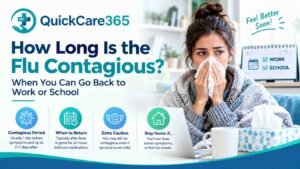
CDC guidance is the same for all three viruses. Stay home until your symptoms have been improving overall and you’ve been fever-free for at least 24 hours without fever-reducing medication. For the next five days, take extra precautions: wear a mask around others, keep your distance where you can, and wash your hands often.
Need documentation for work or school? Add an excuse letter to your visit.
Preventing illness this season
The 2026–27 flu vaccine is trivalent, protecting against two influenza A strains and one influenza B strain. CDC recommends routine flu vaccination for everyone aged six months and older, with rare exceptions. The best time is by the end of October, but getting vaccinated later in the season is still worthwhile.
Vaccine recommendations for COVID-19 have changed in recent seasons. Ask your provider what applies to you this year.
Everyday habits still matter: wash your hands, cover coughs, and stay home when you’re sick.
What about RSV?
RSV (respiratory syncytial virus) is the third major winter virus. In most healthy adults, it feels like a cold. In infants and older adults, it can cause serious breathing problems such as bronchiolitis and pneumonia.
There’s no routine antiviral treatment for RSV, so care focuses on symptom relief and watching for breathing difficulty. The same CDC stay-home guidance applies. Seek urgent care for an infant who is breathing fast, struggling to feed, or making a grunting sound when breathing.
How telehealth can help
If you think you have the flu, book within 48 hours of symptoms starting. That’s the window in which antivirals work best. A provider will review your symptoms, test results and risk factors, prescribe an antiviral if it’s appropriate, and tell you which warning signs to watch for.
QuickCare365 offers cold and flu and COVID-19 consultations from $14.99, 8:00 AM to 11:00 PM, seven days a week.
Feeling flu-ish? Talk to a licensed provider from $14.99.
Frequently asked questions
Can you have the flu and COVID-19 at the same time?
Yes. Infection with both at once is possible, and a combination test can detect both.
Can the flu shot give you the flu?
No. Flu shots contain inactivated virus or a single viral protein, neither of which can cause infection. Some people get a sore arm or feel tired for a day.
Should I take a flu antiviral if I’m not high-risk?
A provider may still prescribe one if you’re within 48 hours of symptoms starting. It can shorten your illness by about a day.
How long am I contagious with the flu?
Usually from a day before symptoms start until five to seven days after. See How Long Is the Flu Contagious?
Is it a cold or allergies?
Allergies cause itching and no fever, and they follow exposure to triggers. See our guide: Is It a Cold or Allergies?
Do I need a test if I’m young and healthy?
It’s still useful. Knowing it’s flu or COVID-19 helps you protect higher-risk people around you, and a provider may still offer an antiviral within the treatment window.
Disclaimer: This article is general information, not medical advice.